
I was shocked when I learned that Sicily does not even rank in the top 10 most popular tourist destinations in Italy. Rome leads that list followed by Florence, Venice, the Amalfi Coast, Lake Como, Naples and Pompeii, Tuscany, Bologna and Vatican City.
But you SHOULD visit Sicily, because it is full of surprises.
Sicily has been a part of Italy since 1861 but it has its own identity, and it shows in the language, the food and in local pride. Over an eight-day adventure, we focused on wine, food, history and culture and Sicily blew us away!
Sicily’s economy has been in turmoil for years, based on land-ownership rules that favor the wealthy and suppress the lower class, and the Mafia and corruption are still rampant. Agriculture is the primary industry on Sicily (as opposed to industrial manufacturing, in the north of the mainland).
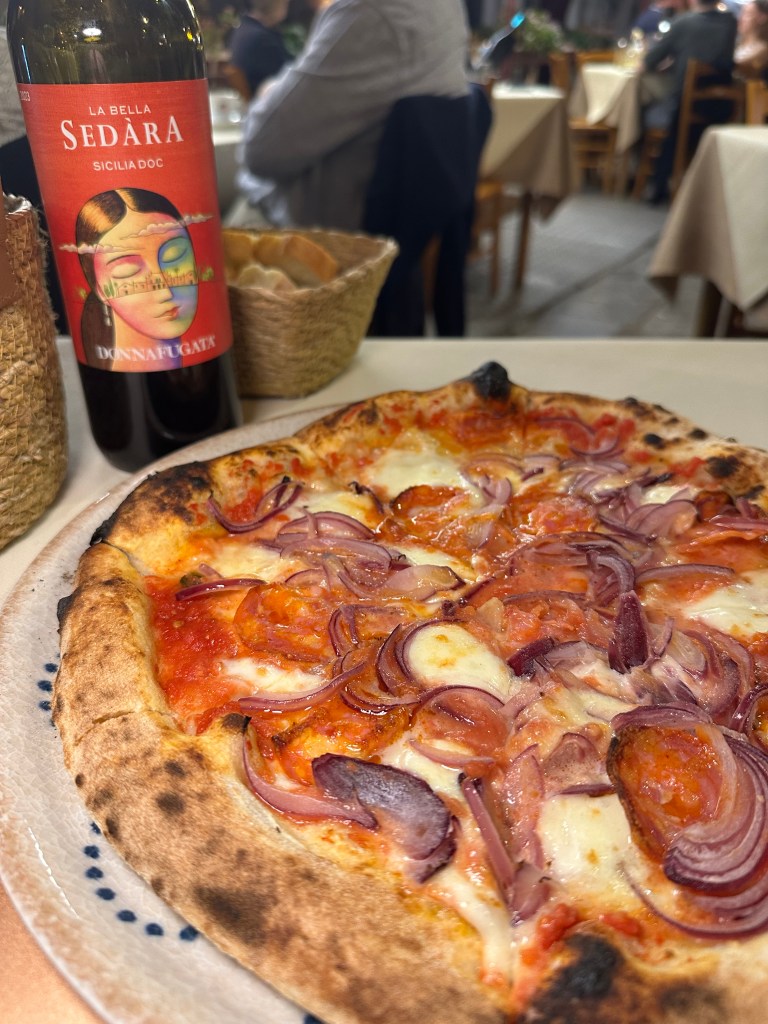
The food reflects the economic history, and that’s why you see the humble eggplant everywhere, full use of every part of animals, and plenty of pasta and pizza. We learned that during World War II, people replaced cheese on pizza (cheese was hard to come by) with breadcrumbs seasoned with capers and anchovies (it’s good!).
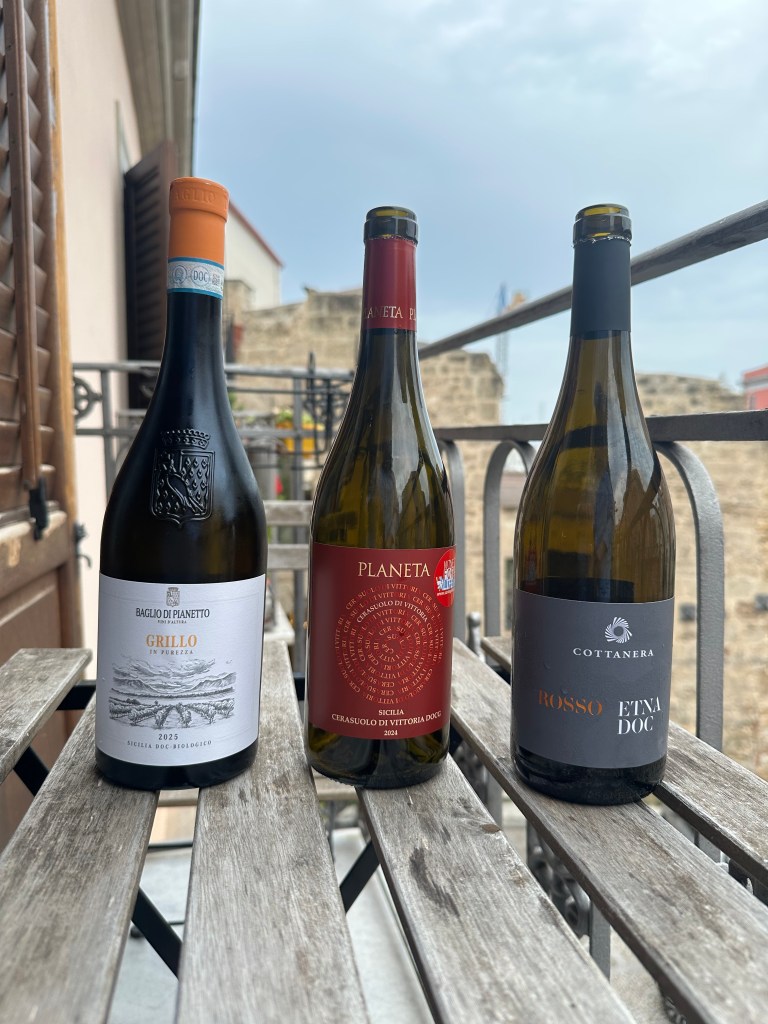
Over the last 25 years, the wine industry has helped elevate Sicily on the global map, and for good reason. The climate – hot and dry – supports excellent vine growth and Sicilian wines are better than ever. Plus, Mt. Etna’s unique volcanic soil lends very distinctive terroir to the wines.
Plus, Sicily has history that goes back as far as 16,000 years ago, and it is fascinating. Here’s an overview of how we did Sicily in eight days. Let’s go!
Day 1
We started in Palermo, in the north. There are plenty of direct flights to Palermo from the UK and Europe. I went through London, from Chicago. This is a bustling 2,700-year-old city of 625,000 people. It was founded by the Phoenicians, and over time, seemingly everyone came, conquered, left and sometimes returned. Greeks, Arabs, Normans – they were all here, and it shows in the diversity of the people, the food and the wine.
We stayed four nights in an AirBnB, and there are plentiful hotels throughout Palermo.
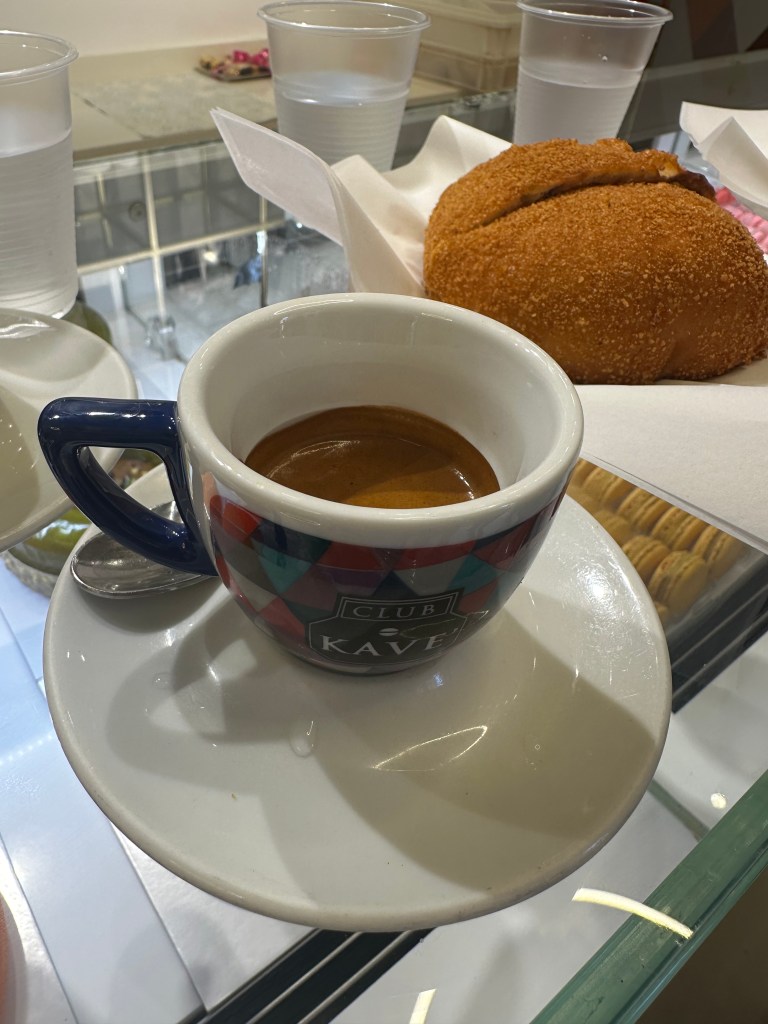
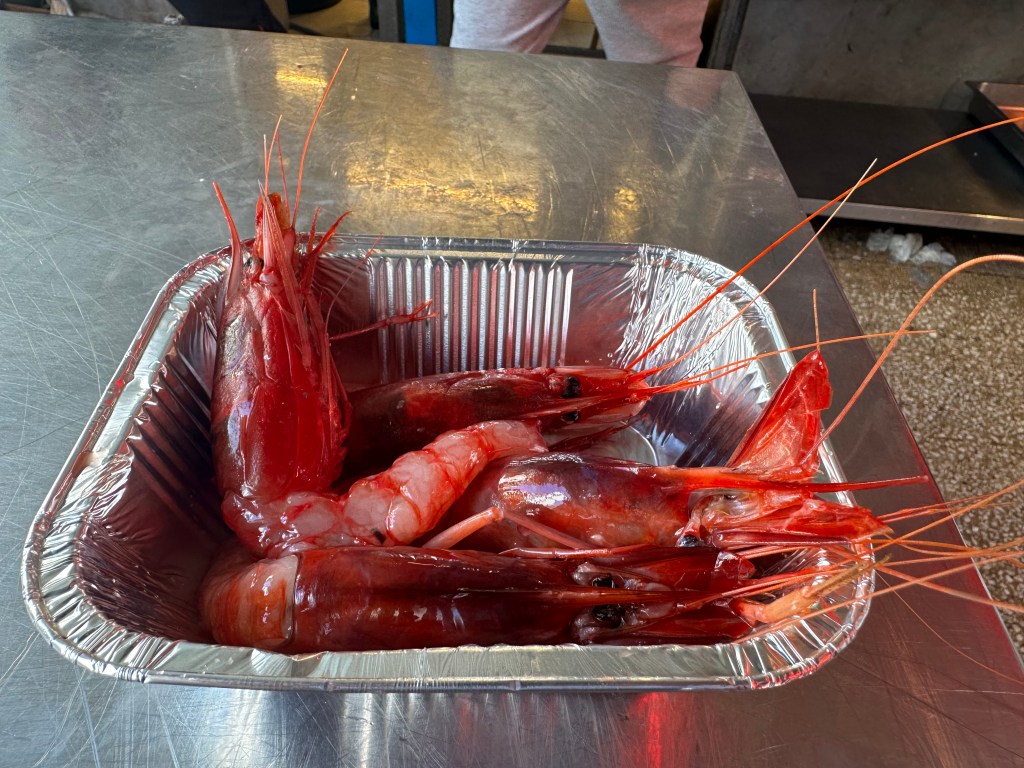
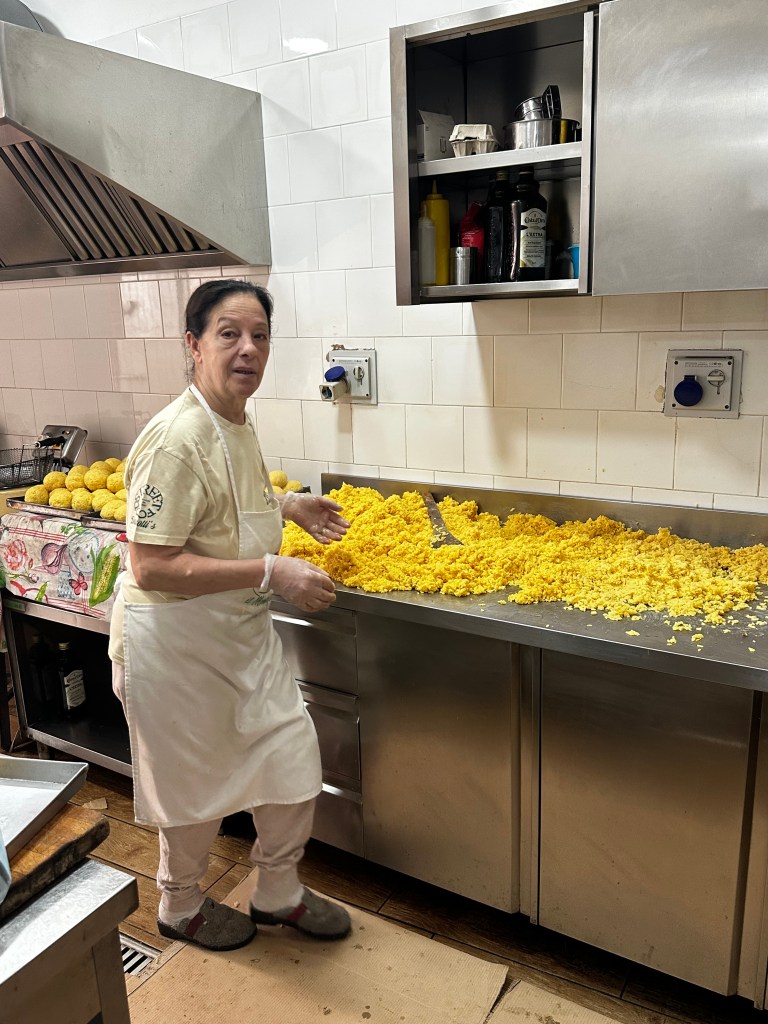
I highly recommend doing a Culinary Backstreets food tour on Day 1. These food tours provide a terrific orientation to the city, and you get to taste a lot of different foods. Most of it is delicious (I’m lookin’ at you, espresso and pastry from Carmelo Sciampagna, famous gambero rosso (red shrimp) and arancini) and some of it is, uh, an acquired local taste (spleen and lung sandwich). You’ll also get a non-food stop or two for a peak into local culture. We stopped at a puppet artist, who creates amazing marionette puppets, which have a long tradition in Palermo. It was really fun.
Day 2
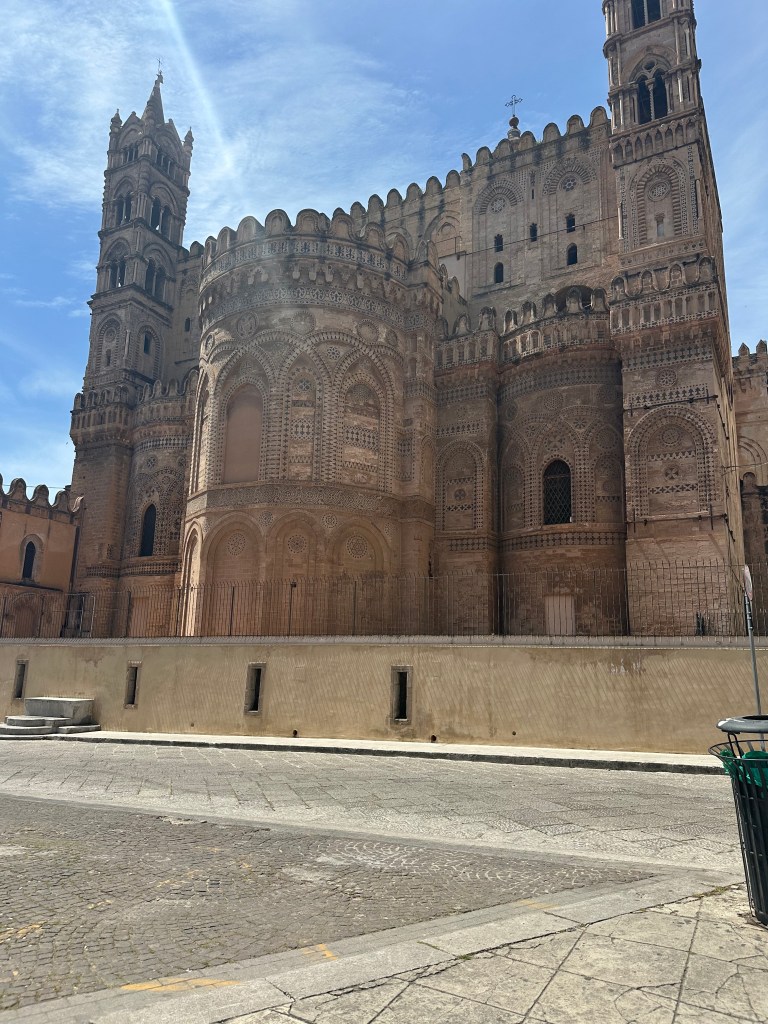
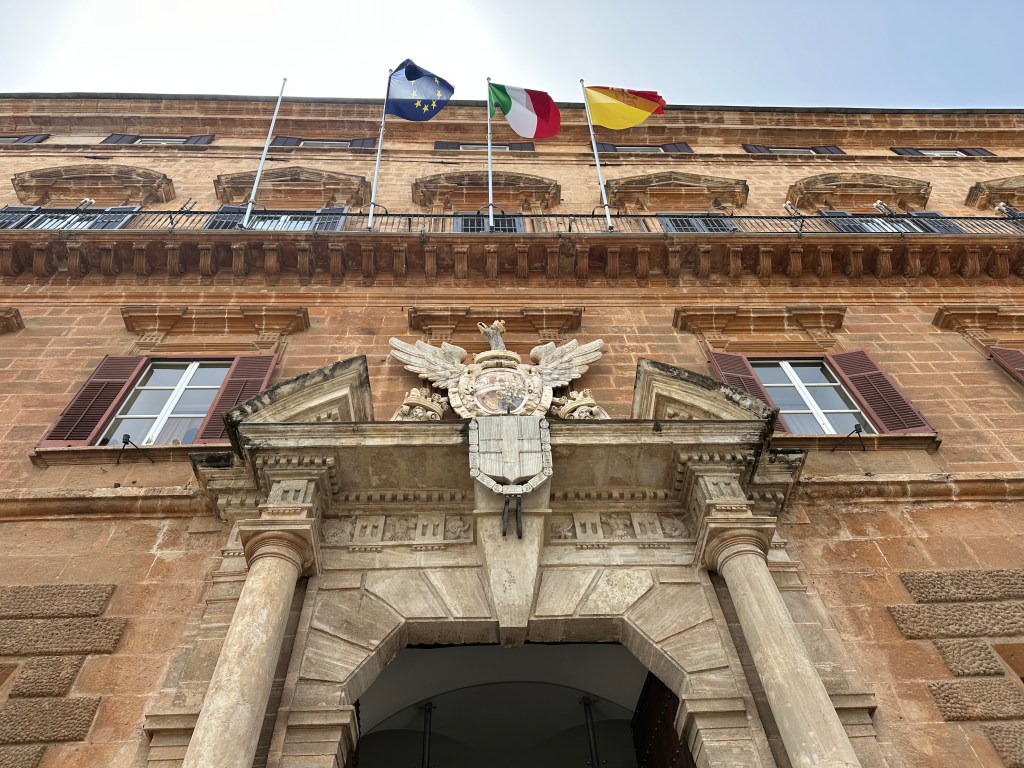
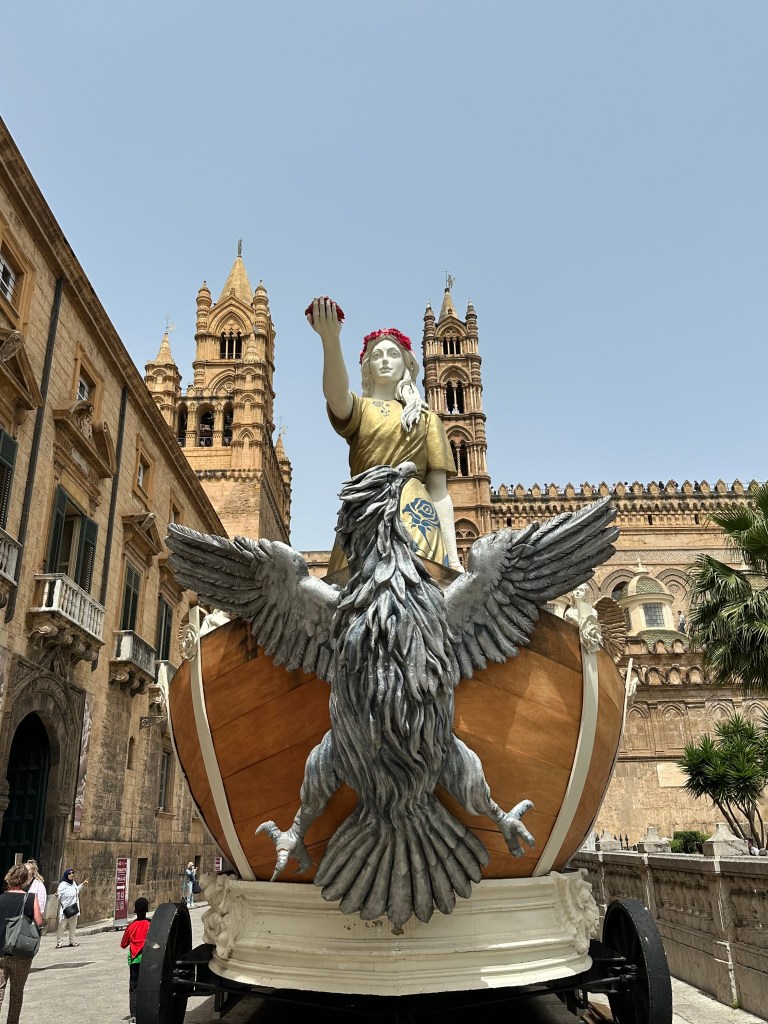
We explored Palermo on our own. We chose the Norman Palace which is legit cool. The building itself is a melange of Arab, Norman, Spanish and Byzantine architecture, and is home to the Palatine Chapel. The Chapel is a doozy when it comes to fancy, gold, ornate decoration. Afterward, we hit a nearby hidden garden café called Fresco for lunch, and were delighted with the grilled calamari salad and a glass of vino rosato.
After a delightful stroll back down the Corso Vittorio Emanuele (do not miss the Quattro Canti – aka Piazza Vigliena – an intersection of the four quarters of ancient Palermo, marked by four beautiful Baroque corners), we stopped at Eno Wine Bar. I mean, there’s always room for wine and cheese, right? We chose a small cheese plate and a bottle of cold, crisp white wine (Occhipinti’s SP 68).
After a quick rest, it was time to eat again! Dinner was at Il Salumaio di Santamarina, a bustling steakhouse-style restaurant. Here, we were excited to order a bottle of COS red wine (from Vittoria, where we were headed, and started by Arianna Occhipinti’s family), and a juicy, well-prepared steak.
Day 3
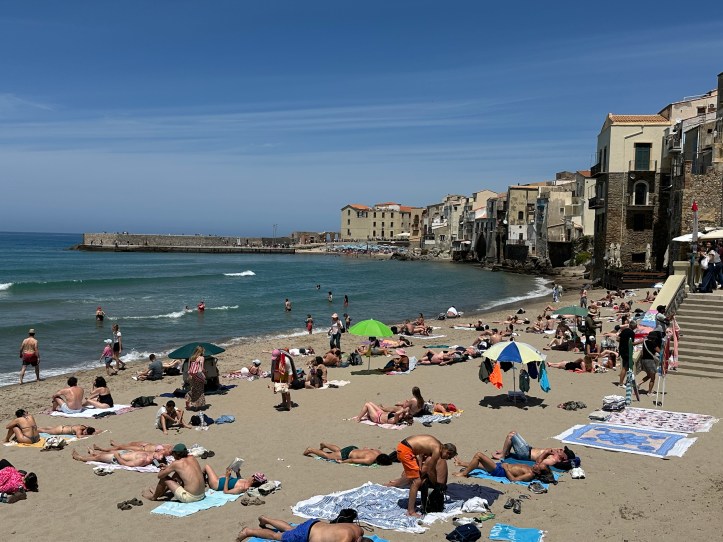
Day 3 is a good day for a day trip to Cefalù, an hour away by train. (Tip: buy train tickets in advance online. European trains have reserved seating and sometimes you are out of luck if you try to buy at the station. For trains throughout Italy, buy on Trenitalia.com.)
Cefalù is a beautiful beach town, with a historic cathedral (I mean, what town in Sicily doesn’t have a historic cathedral?) We wandered around on foot, enjoying the views, the beautiful weather and sort of wishing we’d brought swimsuits!
We lunched at a beach café and enjoyed a simple tuna salad and delicious cantaloupe with prosciutto. With a Campari Spritz and an ocean view, it was perfection.
Day 4
On Day 4, we picked up a rental car and hit the road. (I like Europcar or Sixt for best prices and service.) For Italy, you need an International Driving Permit. What is this? It’s a total racket, if you ask me. You have to go to AAA or another such place – or order it online in plenty of time – and pay about $20-$30 for this stupid booklet with a passport-style photo in it. How does this differ from a U.S. driver’s license? I have no idea, but Italy requires it, so you have to get it.
Tip: bring a car charger for your phone so you can use maps all you want without worrying that your phone will die.
Tip #2: Ask your rental car person about highway tolls. We hit one or two and had to pay the max toll because we obviously didn’t have a toll-card thing in the car.
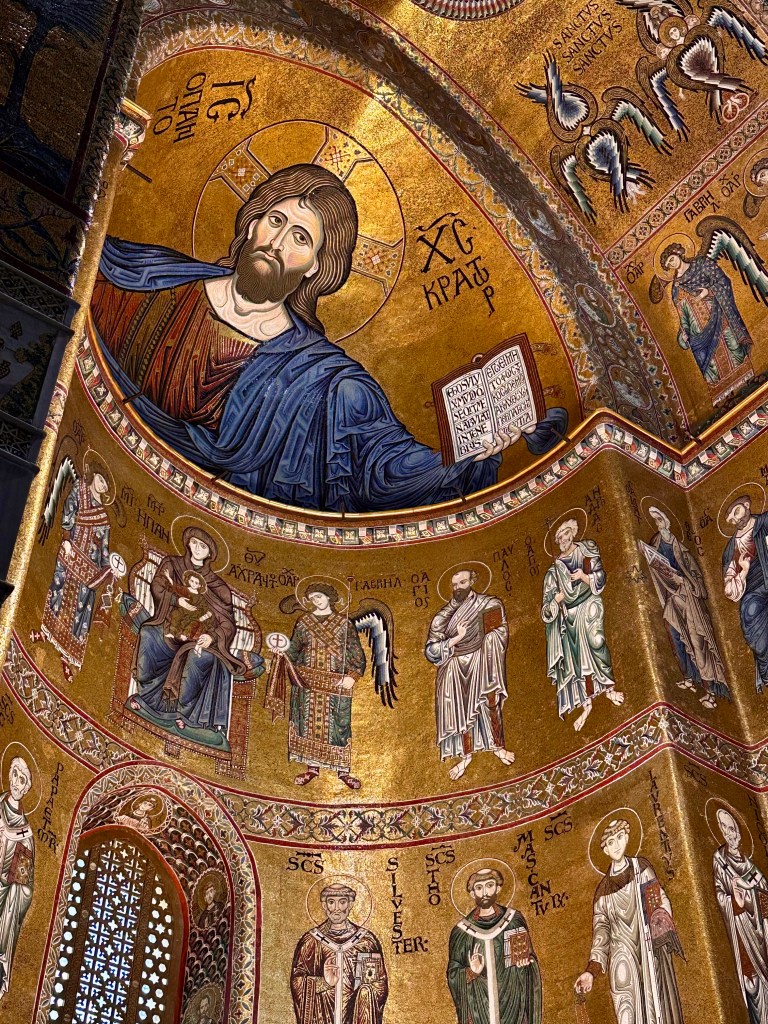
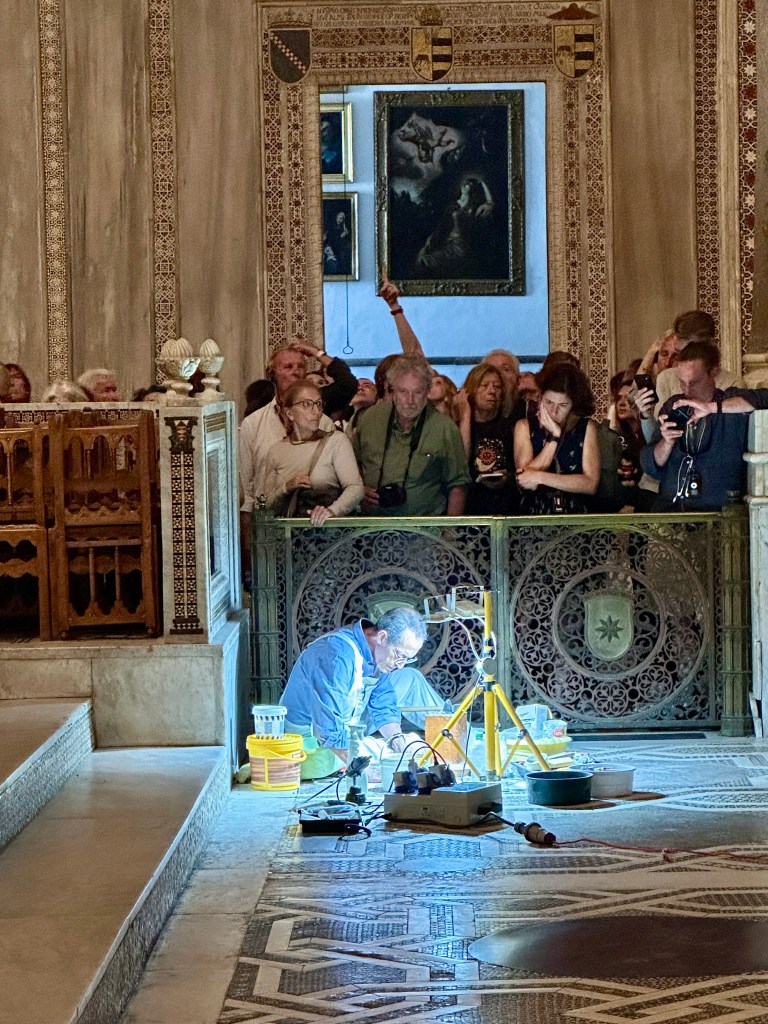
Our first stop was a small village called Monreale, known for its amazing cathedral, decked out in buckets of gold. It’s just about 15 minutes from Palermo by car, and the town is very cute. (It was cool to see an artisan working on restoring a part of the tile floor, too.)
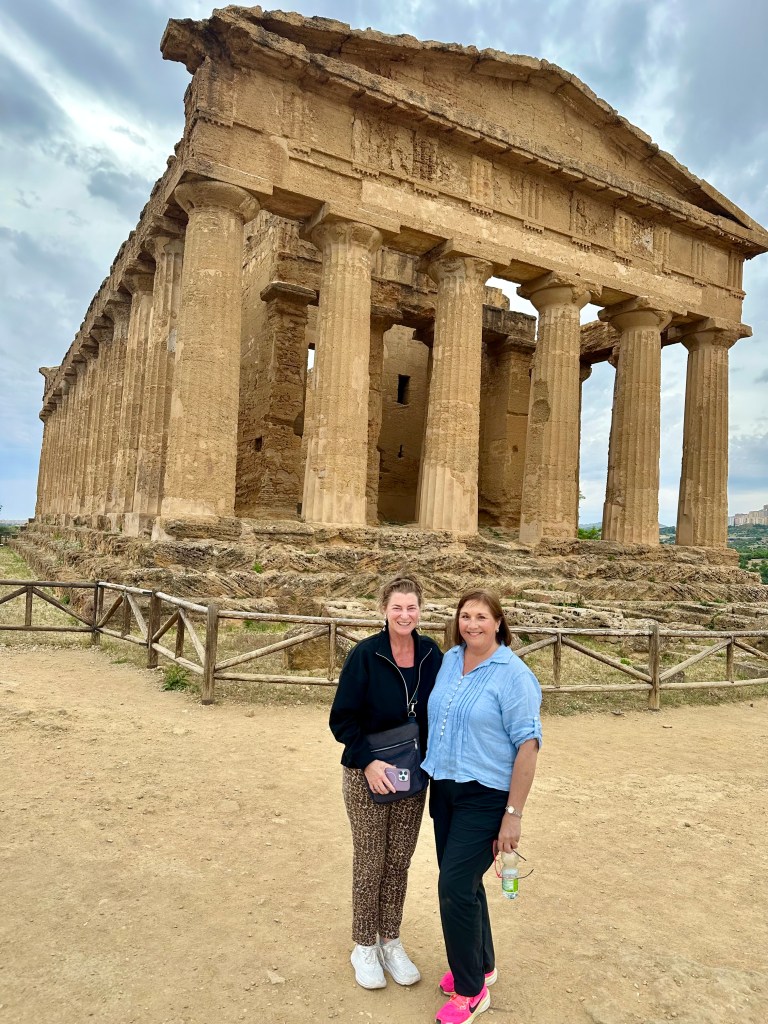
On to Agrigento. Everyone said, “If you go to Sicily and skip Agrigento, you are dead to me.” And now I know why. Agrigento is home to the Valley of the Temples and they are AMAZING. It’s about two – three hours’ drive from Palermo. We arrived in the town of Agrigento about 2 p.m., checked into to B & B Donna Teresa and found a late lunch in town (arancini and more tuna salad – our favorite!)
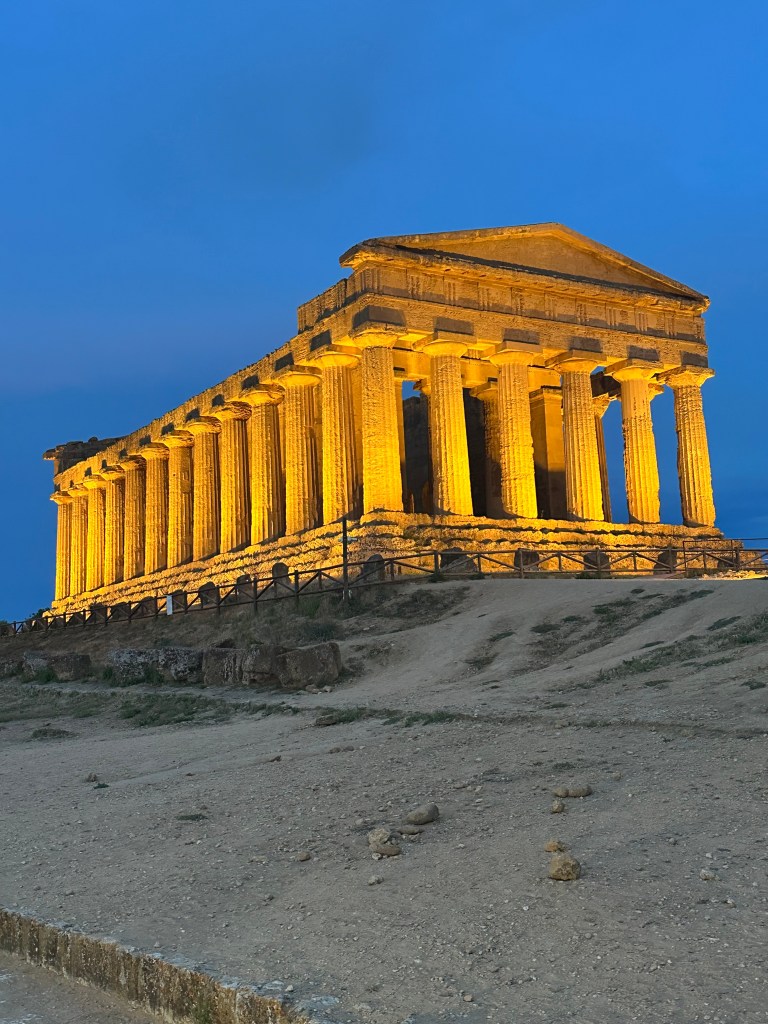
We did the 6 p.m. sunset tour of the temples (booked through Viator) and it was fantastic. Bonus: you get to see the temples up close when the lights come on at about 8:15 / 8:30. Tip: Morning tours can be full of school kids and also hot.) It would be very difficult to do a self-guided tour. There are not a lot of signs and you really want a guide to explain what’s what.
These temples were built by the Greeks waaaaay back in 581 BC. The Temple of Concordia is almost fully intact (except for the roof), and others are very well-preserved. Our guide explained the entire history, from the Greek Colony, to when the Carthaginians arrived from North Africa and said, “This party’s over; get out; this is ours now.” And then the Romans came and eventually it turned into a Christian community. The history is fascinating. Go. There is a lot of walking, so wear sneakers and bring a bottle of water.
Day 5
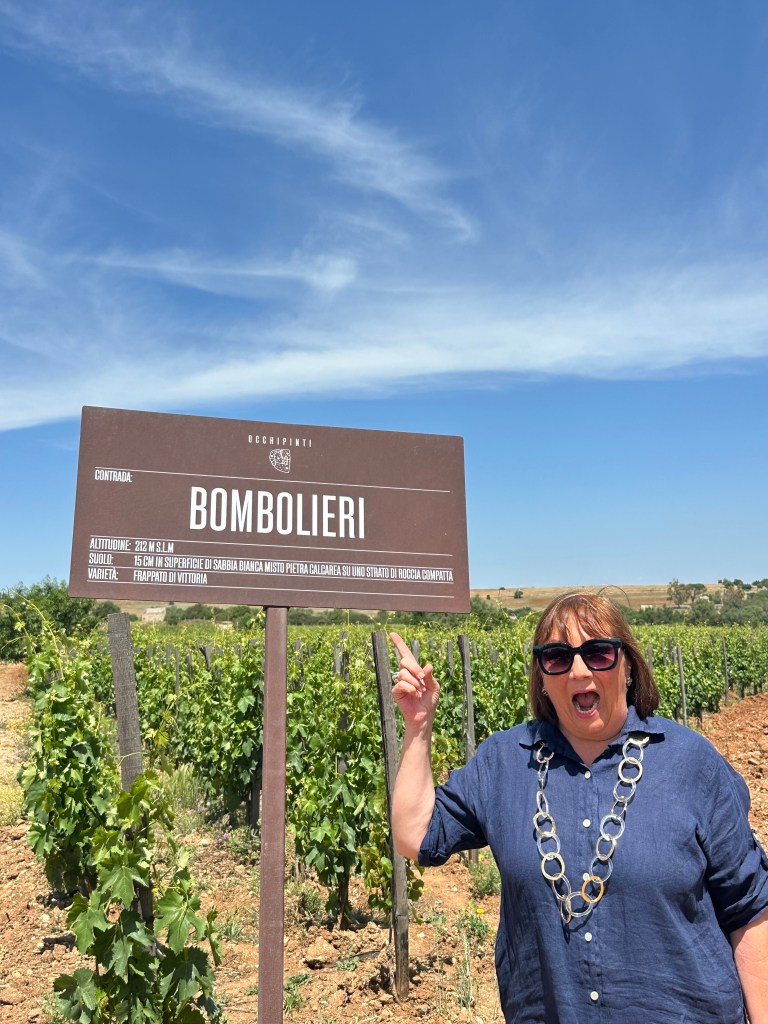
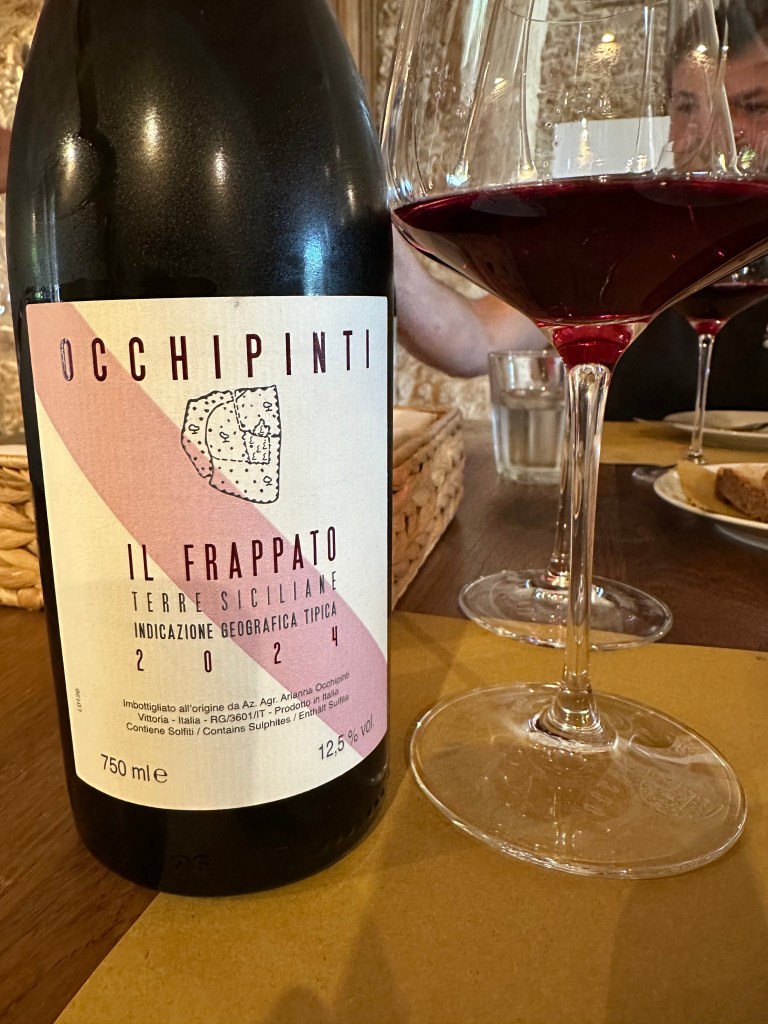
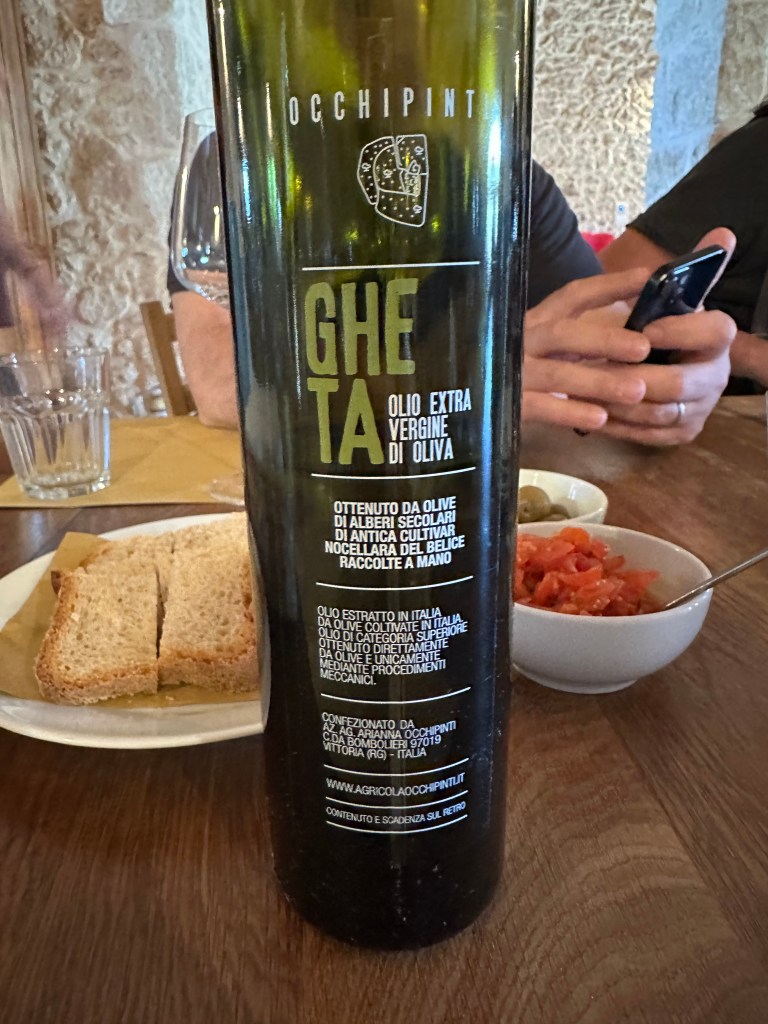
We left Agrigento early and drove to Agricola Azienda Occhipinti in Vittoria region for a tour and tasting. This is one of Sicily’s most remarkable wineries. Founder and owner Arianna Occhipinti approaches grape-growing and wine making with a distinct perspective. Those who have seen Stanley Tucci’s “Tucci in Italy” may recognize Occhipinti; he interviewed Arianna on an episode.
While her father and brother run COS winery down the road, Arianna she set out to grow grapes and make wine her way, and she is a revolutionary in the best possible way.
For starters, she saved the Frappato grape from near-extinction. As more and more wineries increased production of the region’s famous Nero d’Avola wine – big, bold, higher-alcohol – Arianna saw potential in Frappato, which is lighter, brighter, a little lower in alcohol and now, thanks to her, a hallmark grape of the Vittoria region. She also grows Nero d’Avola and plenty of beautiful white grapes, too, including Grillo, Muscat of Alexandria (aka Zibbibo) and Albarello. If you are a wine lover, this is one winery not to miss on Sicily.
Wine Nerd Note: Welcome to Cersasuolo Confusion. There are two different wines that go by the name Cerasuolo. They are both excellent, but completely different from one another.
- Cerasuolo di Vittoria is a red wine that is a blend of Frappato and Nero d’Avola, that comes from the Vittoria DOCG in Sicily
- Cerasuolo d’Abruzzo is a rosé wine made from the Montepulciano d’Abruzzo grape that comes from the Abruzzo region of mainland Italy
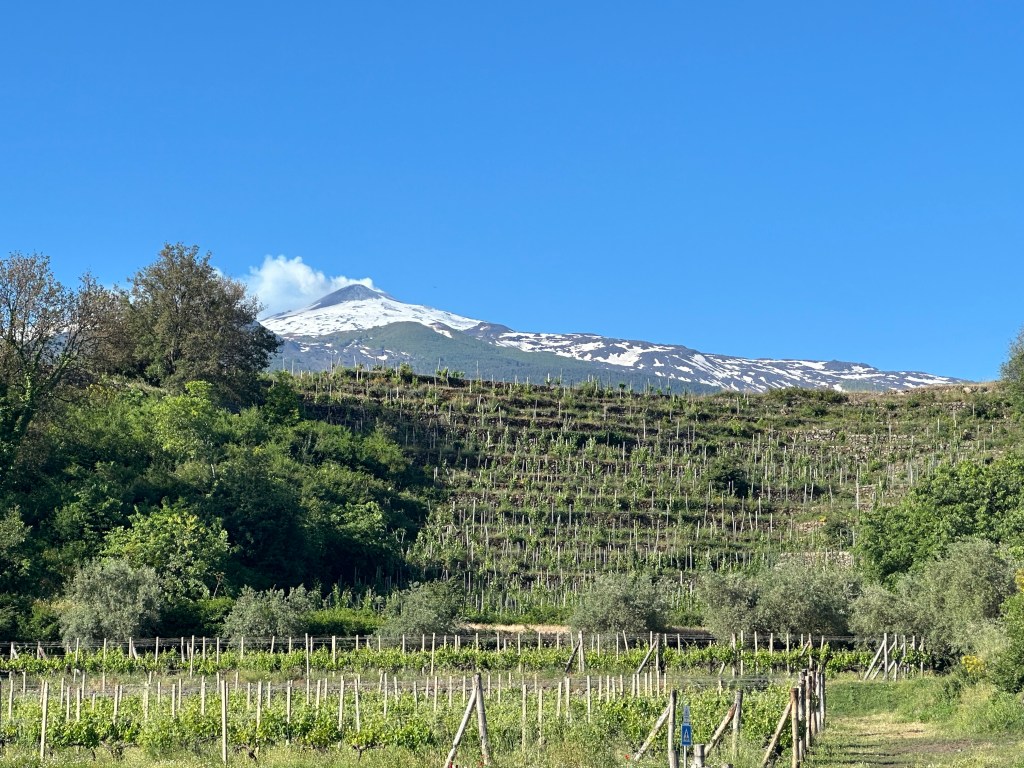
After the tasting (and purchasing a bottle of Occhipinti white wine and Occhipinti’s glorious olive oil), we headed toward Mt. Etna. Destination: Cavanera, by Firriato, a luxury resort on the slopes of Mount Etna, created by Firriato, one of Sicily’s most well-known wineries. Their main winery property is over in Trapani, on the west coast of Sicily, but they built this property because Etna’s volcanic soil makes for razzle-dazzle wines with distinctive character found no where else.
Volcano Note: Yes, Etna still erupts about three times a year (most recently on June 29, I am so mad I missed it!) Each eruption seems to be on the small-ish side, with lava flow or steam venting. It’s one of the most active volcanoes in the world.
Day 6
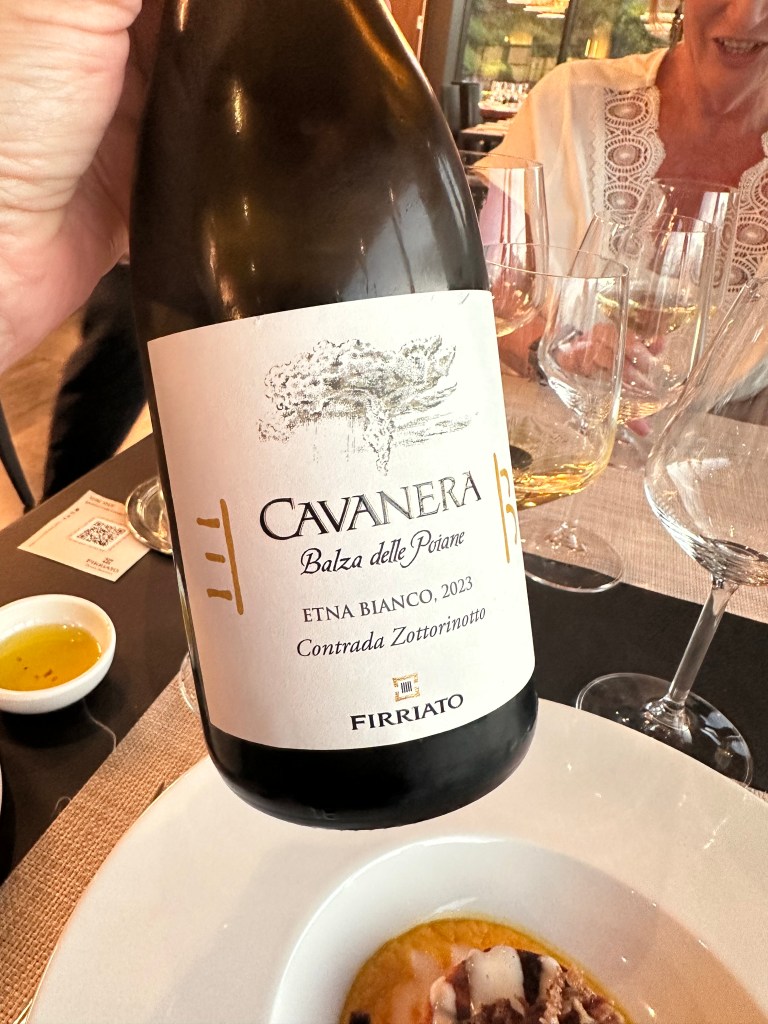
Upon arrival at Cavanera, we were greeted with a chilled glass of sparkling wine (ahhhh). And in our rooms there was a complimentary half-bottle of your choice of red or white wine. Nice touch. We dined at the La Reserve restaurant for dinner and it was very good. (No one wants to drive the twisty, narrow roads of Mt Etna after dark.)
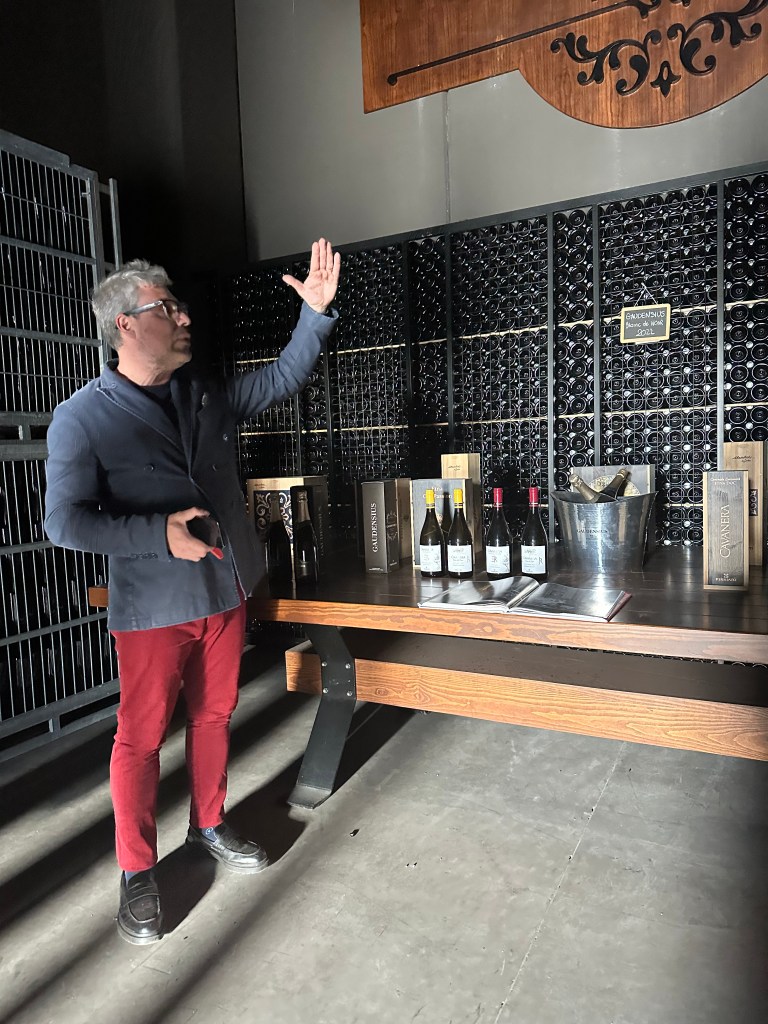
On Day 6, Cavanera’s pool beckoned. We were bushed after five days of touristing hard and needed a break. So we just relaxed by the pool and enjoyed the majestic Mt Etna views. We also signed up for a 6 p.m. tour of the vineyards and the winery with Enrico (the most enthusiastic host I’ve ever met) followed by a wine-pairing dinner in the La Riserva restaurant. Perfect day.
Day 7
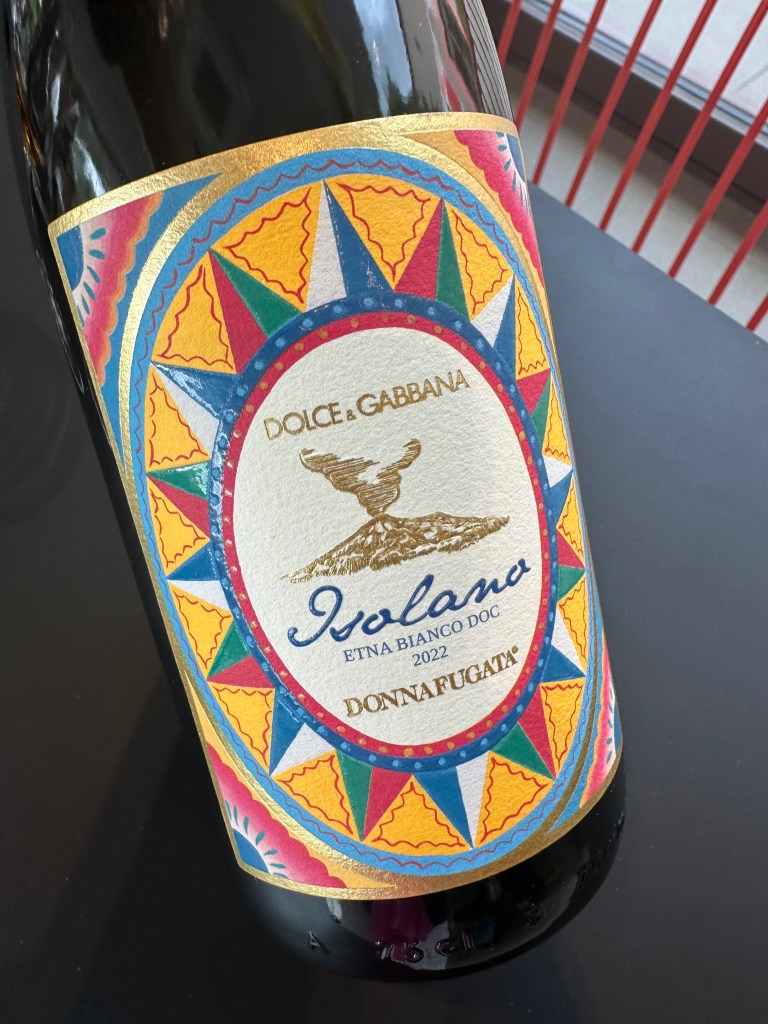
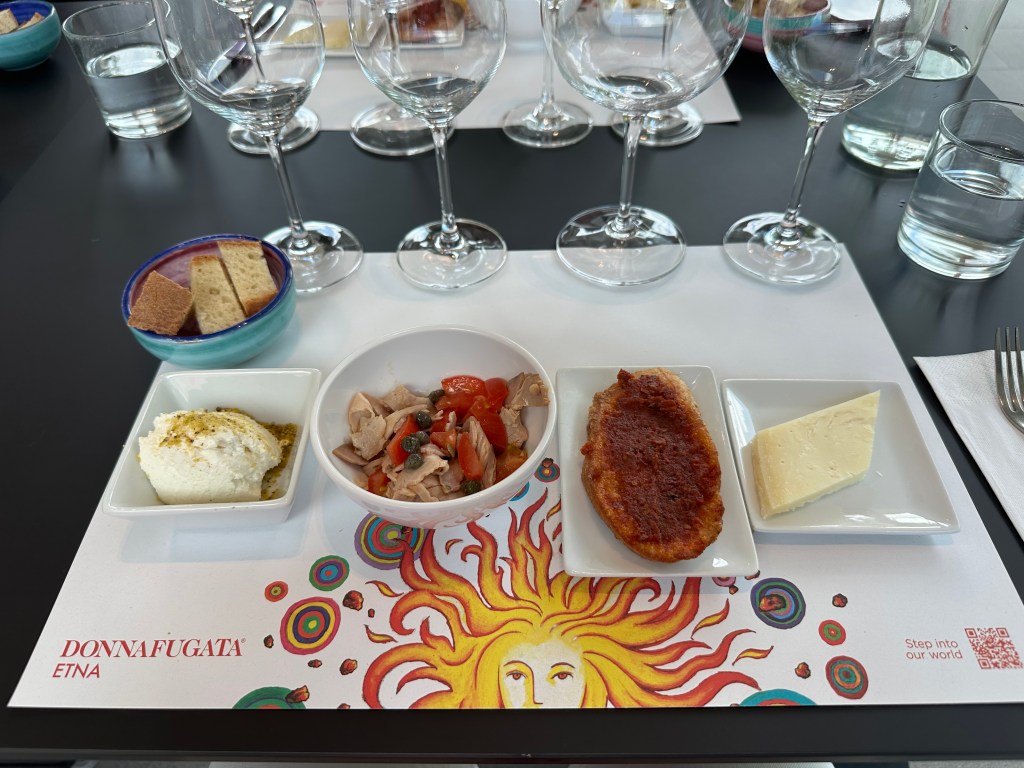
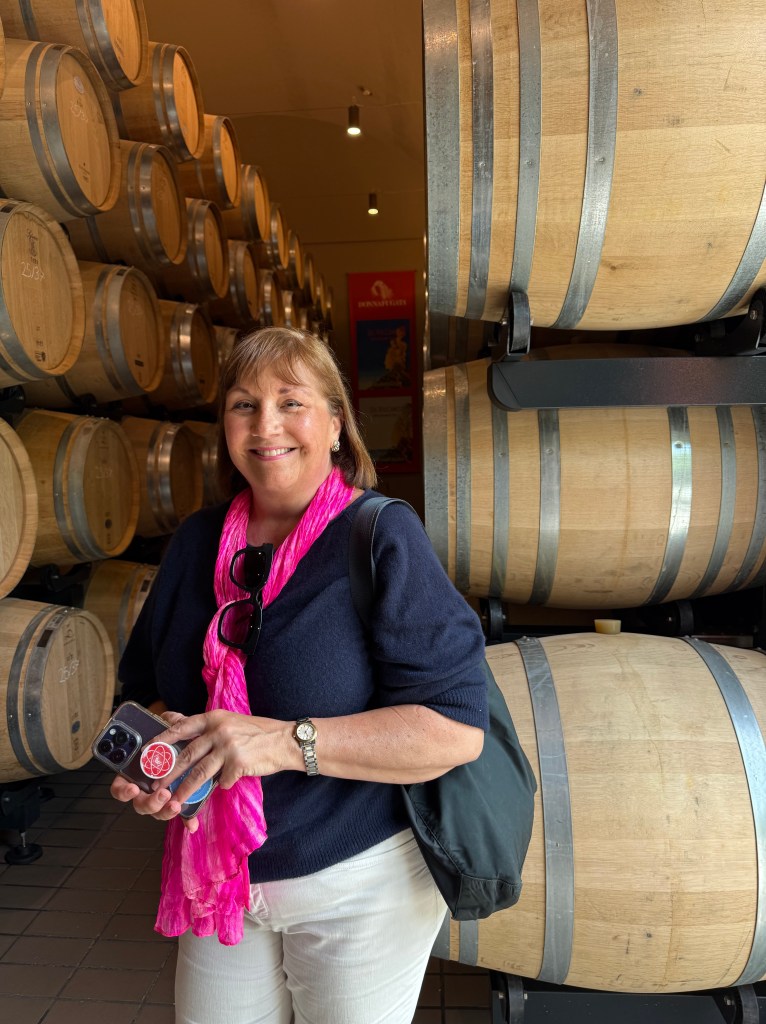
After breakfast at Cavanera, we checked out and headed for Donnafugata Winery just 15 minutes away if you don’t get lost (like we did).
Donnafugata translates to “fleeing woman,” and the Rallo family took inspiration for the name from a famous Sicilian novel, in which Queen Maria Carolina fled from Naples and found refuse in the vineyards where the family established the winery. Cool story, no?
Since then, for more than 170 years, the Rallo family has been producing exceptional Sicilian wines in small lots. Their original property (like Firriato’s) is over near Marsala, on the west coast of Sicily. They established their winery on Mt Etna in 2016. The family has invested significantly in creating global awareness for their Sicilian wines. It was a great visit!
After the tasting of four wines (which I spit everything because: driving), we began the long, slow drive down Etna, to Siracusa. Siracusa is a seaside city of about 100,000 that has millennia of history. From the 5th century BC, it was Sicily’s main city, founded by the Greeks (so long ago I can’t even comprehend). We dropped the car off and headed to our AirBnb in Ortigia.
Day 8
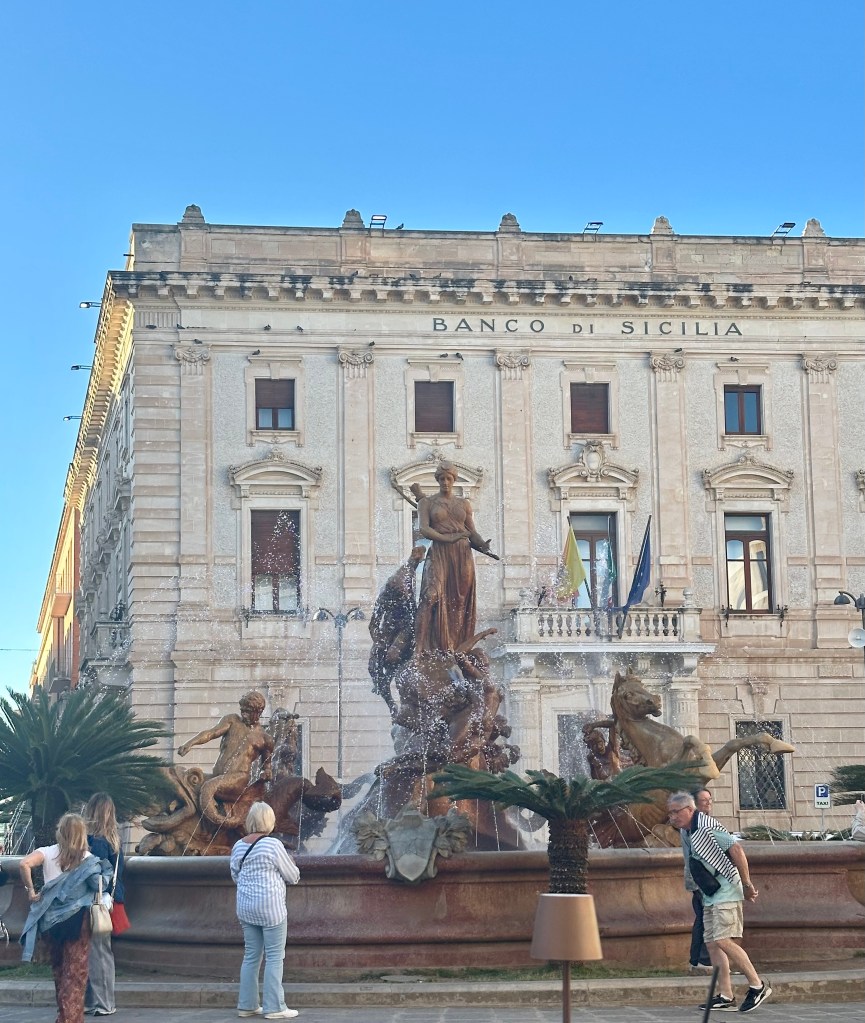
Ortigia is yet another madly historic Sicilian city. It’s attached to Siracusa via a series of short foot bridges. It’s a tiny island – you can walk the entire perimeter in a couple of hours – with narrow streets, historic ruins and beautiful sea views. The center of Ortigia is marked with the majestic Fountain of Diana in the Piazza di Archimedes (famous inventor, although his status in another part of Ortigia is kind of puny, to be honest).
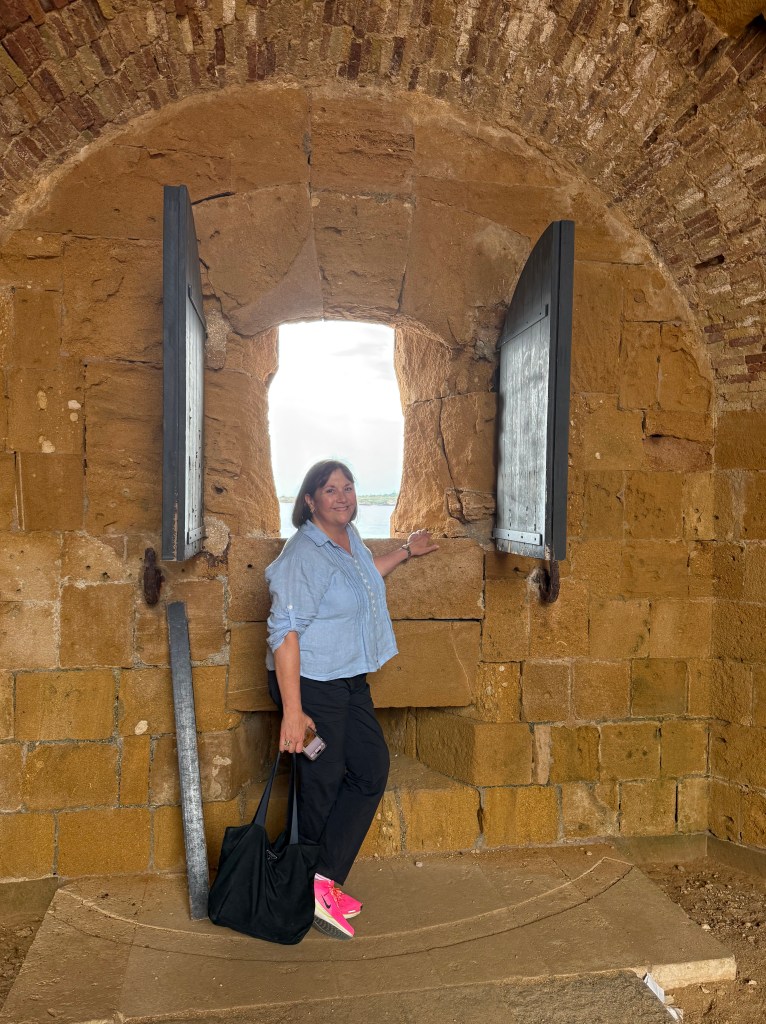
We loved Ortigia for its history – you should definitely visit the Castello Maniace. This is a Citadel that dates back to the 1200s, and gives you a great insight into the Byzantine and Greek history of early Ortigia.
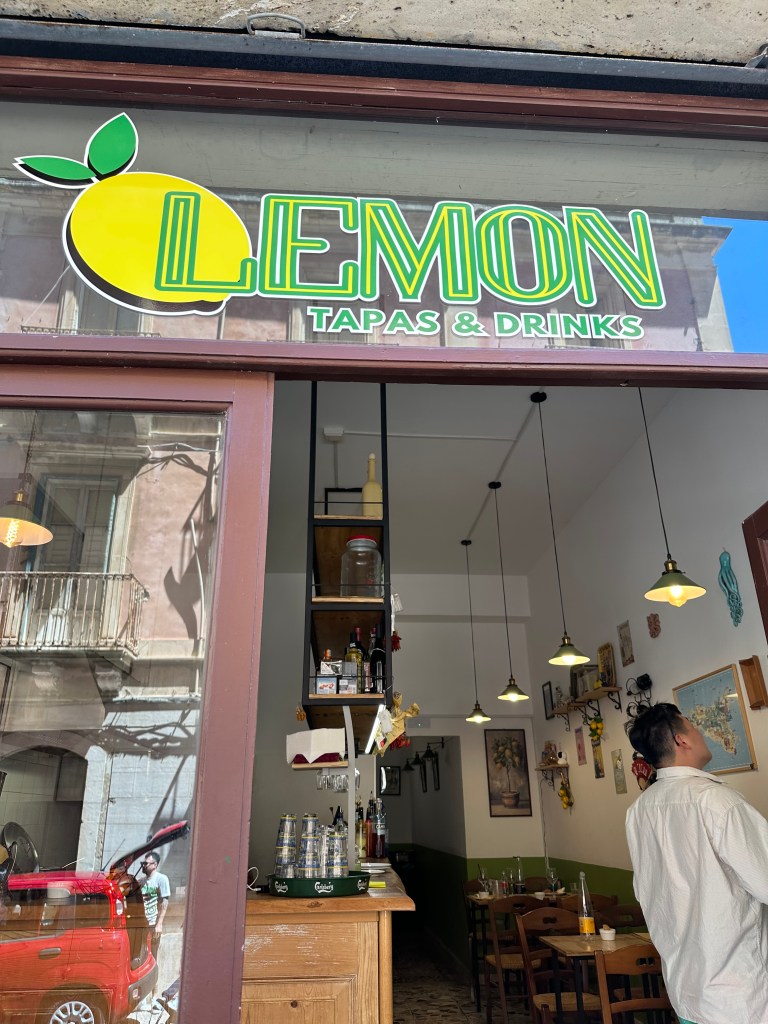
For lunch or dinner, try Lemon . We had the best pasta of our whole trip here: simple spaghetti, perfectly cooked, with excellent olive oil, parmesan and chile flakes. So simple, so freaking delicious. And some seared tuna. And some rosé. And possibly a Campari Spritz! This is a tiny restaurant (three-four tables inside, and three-four outside, so go early or late for lunch or dinner.
For dinner, we headed to La Porta Urbica, a very cute restaurant with a lovely street patio.
On Day, 9, we packed our bags and continued our adventure to Malta, but that is for another story!
Bottom Line
For one of the best lessons in ancient history, go to Sicily. For warm, friendly people who are happy you are visiting, go to Sicily. For great wine – red, white, rosé, sparkling – go to Sicily. For a wide range of food that you find only on Sicily – gambero rosso (the famous red shrimp), arancini, Bronte pistachios, cheeseless pizza and more – go to Sicily. Cin cin!


Hey Liz, it’s Minette and I really enjoy your posts. One question… how have you not aged since college? Probably all the wine. I love Italy but have not been to Sicily. This post makes me want to do a food and wine tour. If only Stanley Tucci could join me. Keep up the good work.
Sent from the all new AOL app for iOS
LikeLike
Well, thank you so much, old friend!
LikeLike